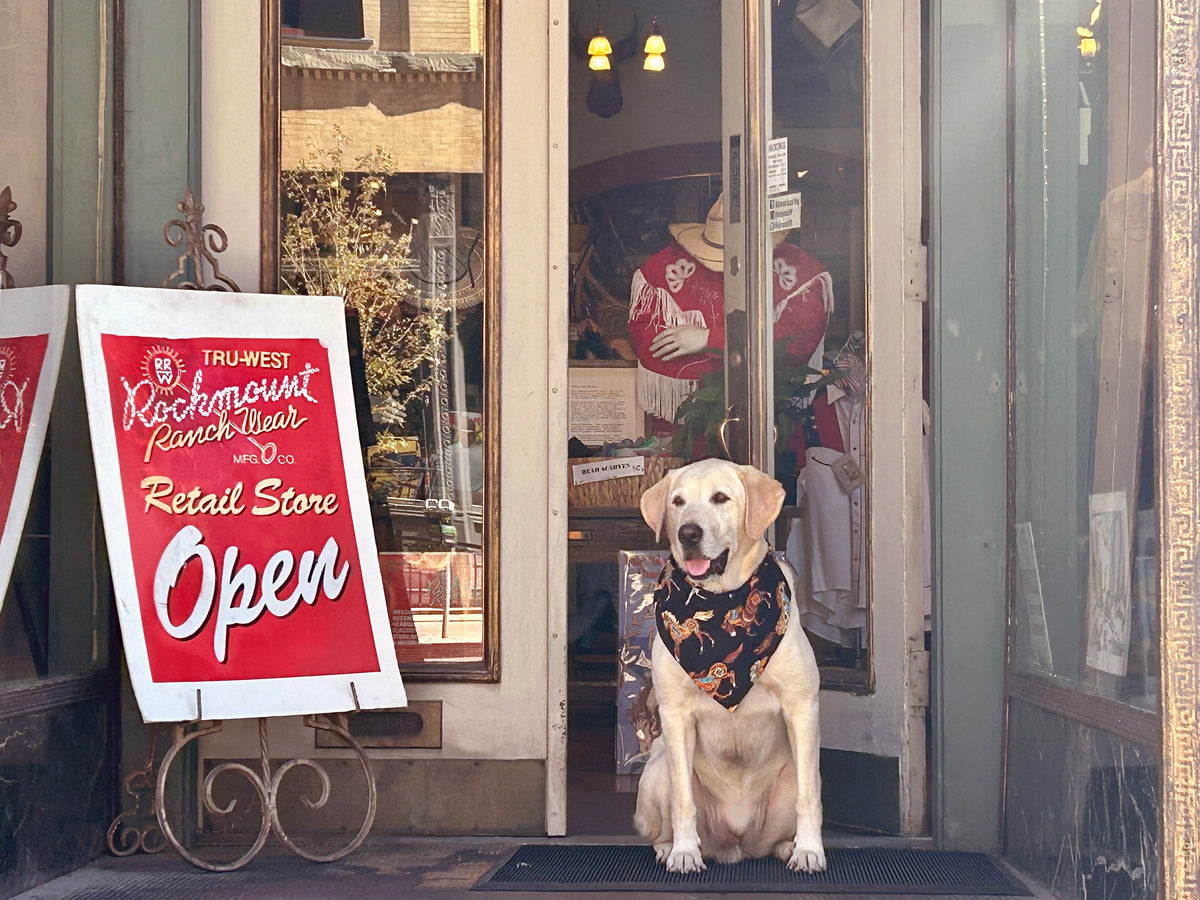
Want the lowdown on the real-deal Western shirt? Go to the guy who really knows his shirt. For the 411 on snazzy pearl snaps and more, we talk with Steve Weil of Rockmount Ranch Wear.
When we spoke with Steve Weil for our October/November issue about his new book, which delightfully documents decades of celeb-fave Rockmount Ranch Wear’s Western shirts, we couldn’t stop loving everything he was telling us about pearl snaps and the famous folks who love to wear them. How did Eric Clapton get 17 Rockmount shirts in time for his Cream reunion concert in London and what shirt does Bob Dylan wear for black-tie? Find out here in our uncut interview.

Cowboys & Indians: What makes a shirt Western?
Steve Weil: Good question and not easy to answer but, I know it when I see it! One of the most fundamental things in defining Western is that it means different things to different people. Western design is all about individuality. There are many elements that define Western design. A shirt can have a few or many Western features, depending on the design vision. At Rockmount, a Western shirt has snaps, two pockets, a back yoke, maybe front yokes, stylized cuffs, and special detailing that gives it a distinctive identity. Our shirt collection includes simple dress shirts comparable to the finest conventional dress shirts but with a Western twist. We have vintage embroideries, denims, plaids, solids, quirky prints, flannels, fleece — 100s of fabrics in a full range of colors. What they have in common is our design heritage and label. We make many of our fabrics, so they are unique.
C&I: How and why did Western shirts come into being?
Weil: My grandfather Jack A. Weil envisioned a fashion identity for Westerners back in the 1930s. They had boots and hats but no identifying shirts. Conventional shirts were boxy and without design variation. He introduced the first snap shirts, along with many treatments that became the elements of Western shirts. These are signature designs for Rockmount, such as sawtooth pockets and diamond snaps. This design is the longest-running shirt in America.
C&I: How have the shirts evolved?
Weil: Evolve or die. Innovation is in our DNA. The fabric in the earliest shirts was sourced from other uses like suiting. Papa Jack wanted a distinctive look in Western shirts, so he used fabrics from other intended uses. Later, the mills began making fabrics for Western. Early shirts might be wool or rayon gabardine. We do that type of look today but in cotton, which is year-rround and easier to maintain. My feeling is that the biggest difference between the earlier genres is that they were more of a costume. This look cratered after the Urban Cowboy ended in 1980. As I took over the creative side of the business, my direction was aimed at lifestyle — clothing one is comfortable wearing day to day, but ranging from casual to dressy. Rockmount creates sustainable fashion with a long life, often 10 or 20 years. This is the opposite of fast, cheap fashion, which changes with the wind and barely lasts a season.

C&I: Okay, now for the anatomy of a Western shirt. What is the yoke, and why does a Western shirt have one?
Weil: My grandfather said that the yokes accentuate broad shoulders, which was part of the cowboy ideal. More important, they are an important Western design element, differing from conventional looks.
C&I: What is the pointed/angular yoke?
Weil: Yokes are made in unlimited shapes. Basic ones in front might be “V”- or “U”-shaped, or contoured with points. Back yokes in our shirts are often three-point curves made by skilled seamstresses.
C&I: Why are the closures snaps instead of buttons?
Weil: Snaps have two roles: a special design element and also practical. They distinguish Western shirts from boring conventional ones. They also serve as a practical feature if your shirt is snagged by a bull horn or a tree branch. What cowboy wants to sew his buttons back on?
C&I: When and why did pearl snaps come into being?
Weil: We introduced the first ones in the ’40s, which predated pearls. In a few years we made snaps with real mother-of-pearl, but this cracked when it was run through a laundering press. So by the ’50s, we changed to more durable synthetic inserts, which are still used today.
C&I: Walk us through some of the lingo on pockets: “sawtooth,” “flap," “smile” — could you explain each?
Weil: Our “sawtooth” pockets have a “W”-shaped flap. We also make “quarter horse” flaps with a curve and point toward the center of the shirt. “Smile” pockets are used in our vintage collection and are shaped as they sound, but we actually do many variations on the shape. They have embroidered arrowheads on each end to secure them but with a flourish. The simplest flap is a single point which we use, too, but they are somewhat generic so we do few.

C&I: Sorry, more grilling. Explain the “shotgun” cuff. Ditto the “barrel” cuff.
Weil: Shotgun cuffs go with our vintage shirt design. They are shaped like a frying pan, wide at the cuff, narrowing to a handle like a placket toward the elbow. Sometimes we do six snaps on them. Standard cuffs get three plus one on the sleeve placket.
C&I: When did the fancy embroidery start becoming a hallmark of the Western shirt?
Weil: We might say Native Americans did the earliest shirt embellishments with painting, beads, porcupine quills. We did amazing embroidery, highly skilled from the ’40s through the ’60s. Then U.S. labor costs rose and most companies dumbed-down the designs. We kept doing embroidery but really expanded when I reintroduced highly detailed designs in the ’90s. We are perhaps the only company doing a wide range of hand-embroidered treatments, with over 100 active designs.
C&I: What are some classic embroidery designs/motifs, and how does Rockmount come up with them?
Weil: Our embroideries include floral and tooling motifs, Day of the Dead, roping, music, horses, steers, jet rockets, Americana — it’s endless. As for how we come up with them, we have elves in the basement. The three generations were all about the art of the shirt. We draw it, and then our artisans turn it into sewing. We use many different embroidery methods from chain stitch, crochet, appliqué, and more. Cheaper shirts are computer-embroidered, lacking individuality. At Rockmount, it’s all about individuality, which is why AI does not scare us. The other guys can source ideas online, but we are fortunate the public appreciates where these designs originated.
Source: Cowboys & Indians